
Course
Offerings
New York Arts Program’s structure allows students to customize their semester to best suit their interests and ambitions as well as their creative and academic needs.
How it works
NYAP students choose which courses they participate in for the semester and how many. Their course load determines how many hours of internship work they have each week.
For example:
1 course + 30-hour internship
2 courses + 20-hour internship
3 courses + 10-hour internship
-
Students receive a full semester’s worth of credit at NYAP by participating in the program requirements (4.5 credit units/16.875 credit hours). All credits are transcribed as Ohio Wesleyan University Credit Units. Note that the conversion rate between an OWU Unit and a standard credit hour is 3.7.
30-hour internship - 3.25 OWU units / 12.025 credit hours
20-hour internship - 2.25 OWU units / 8.325 credit hours
10-hour internship - 1.25 OWU units / 4.625 credit hours
Credits per course - 1 OWU unit / 3.7 credit hours
We strongly encourage students to participate in internships while at NYAP. That being said, there are occasional instances in which a student cannot apply internship credit to their degree. It is possible for students to enroll in a full course load (four courses) and bypass the internship requirement if necessary.
Course Offerings at NYAP
The courses listed below are generally offered each semester, depending on enrollment. We hope to place students in their top choice courses whenever possible but space can be limited.
ADVANCED STUDIO PRACTICUM
-
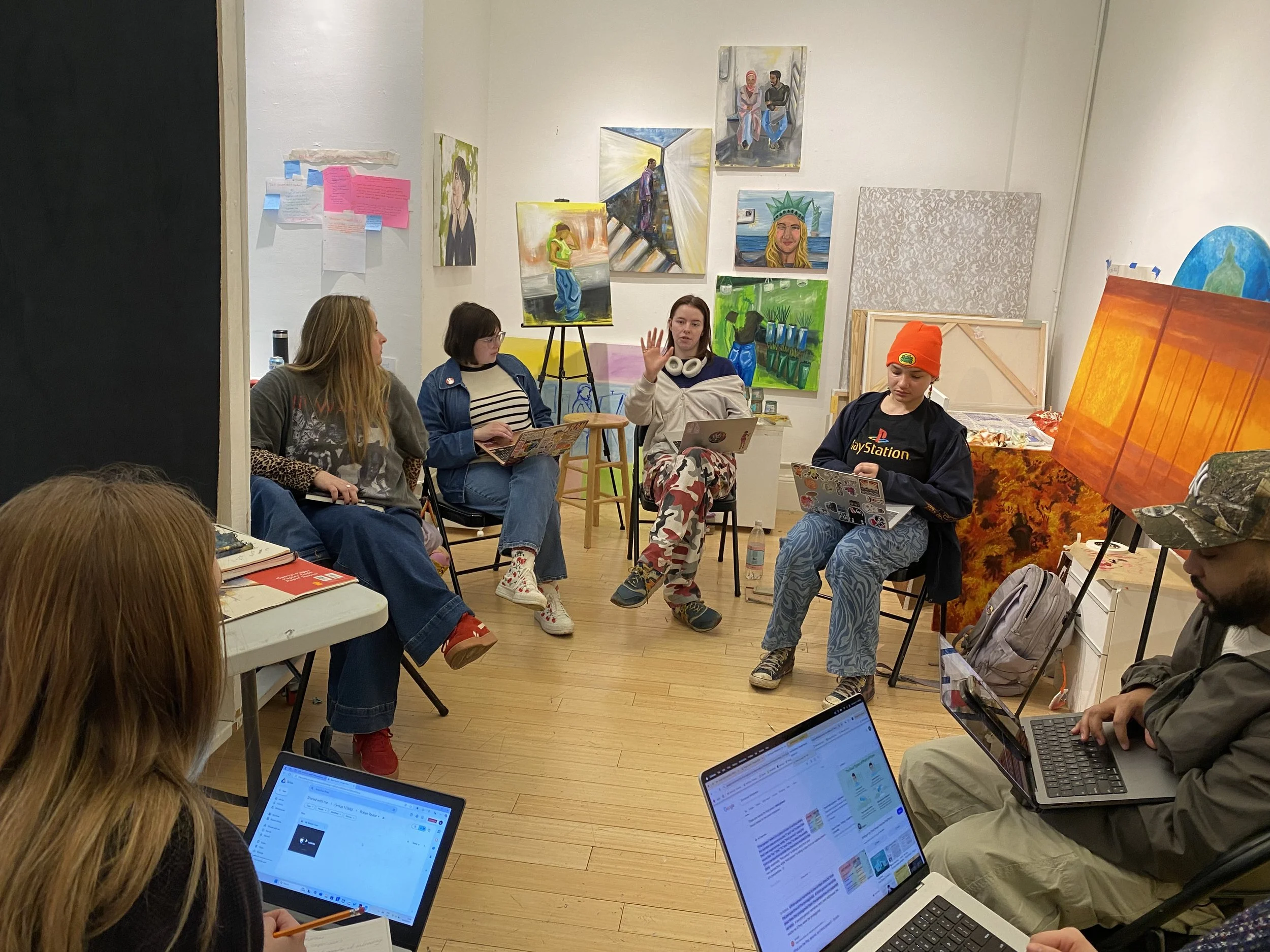
There are moments in an artist’s life when working in a residency environment can shift everything. The art world is sustained by shared energy, conversation, and the ability to think and create at a high level together. This residency is designed to push your practice in new and sometimes unexpected directions, challenging your ideas, your materials, and the way you understand your own work. Our meetings will focus on how to conceptualize a body of work, articulate and question your ideas, and engage in critique that is rigorous, supportive, and honest. Throughout the semester, visiting curators and artists will join our critiques to give you direct exposure to the New York art scene and the people who shape it.
This program functions as a graduate-style studio practicum where you will work independently while having consistent support. The goal is not to leave with a completed portfolio, but to build a strong foundation for one. By the end of the semester, you will understand how to develop a cohesive body of work, create a framework for future projects, and begin shaping a public-facing platform such as a website, a social media presence, or a short video presentation. You will participate in an exhibition, four major critiques, regular classes, weekly, mandatory group sessions, and required one-on-one meetings where you can use me alongside your peers as a sounding board for ideas. You will also commit to a minimum of ten hours in the studio each week to sustain momentum and deepen your practice.
Taught by Skip Brea
PLEASE NOTE: This course includes studio space for its students and therefore has very limited space. Students who hope to participate in the practicum must submit a complete portfolio including written descriptions to be considered.
THE DRAMATIC LANDSCAPE OF THEATRICAL ARTS IN NYC
-
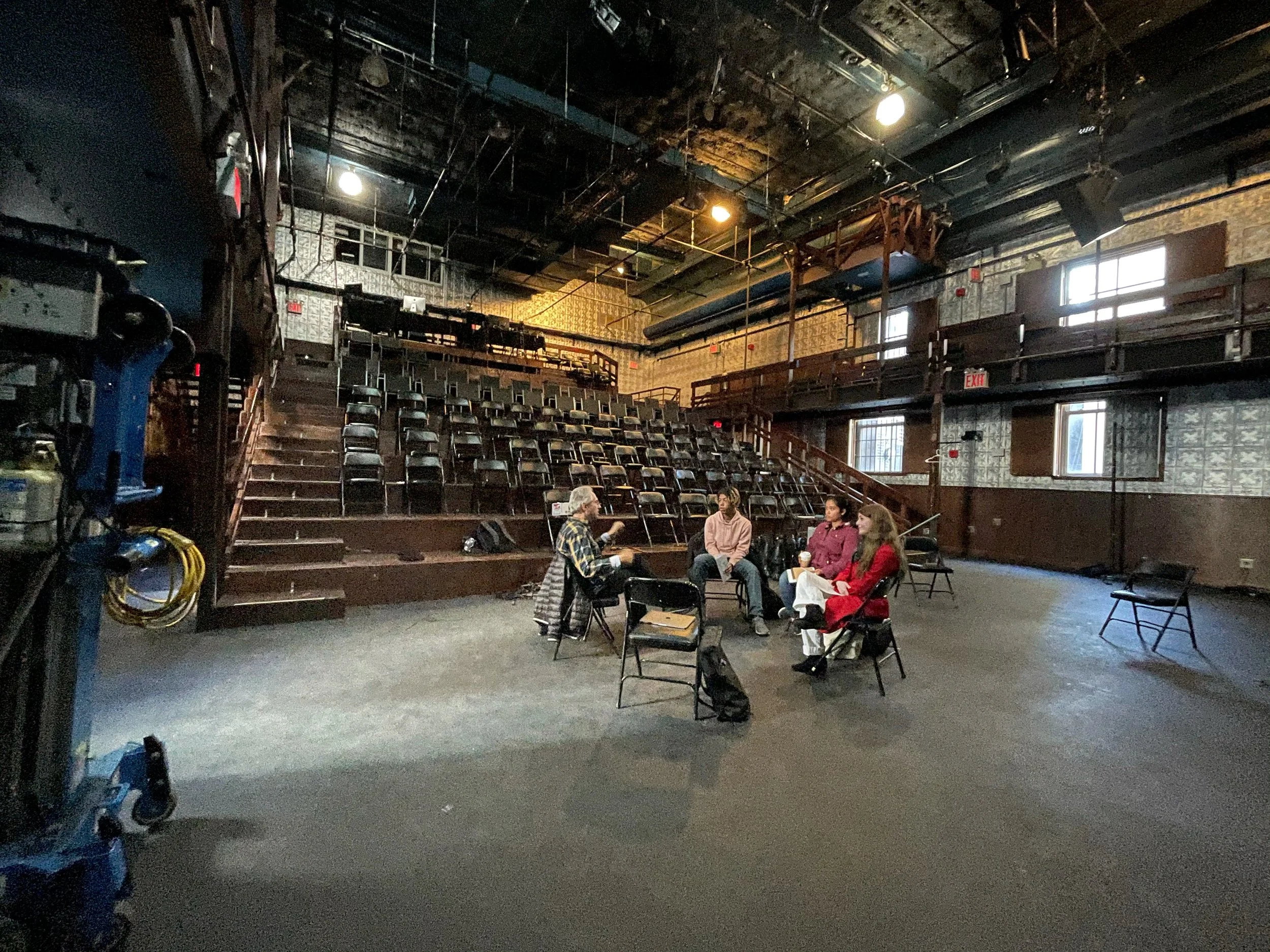
This seminar is your exclusive backstage pass to the heart of the NYC performing arts scene, offering an intimate view through in-person meetings with creative teams behind the shows — an experience you won’t get anywhere else. We’ll explore the vibrant history and the pulse of contemporary theater, providing insider insight and a perspective beyond the ticket stub. You will be introduced to the complex realities of the industry firsthand as we connect directly with top-tier industry professionals, sit in on live rehearsals, and receive behind-the-curtain access tours of iconic theatrical venues across the city. Throughout the seminar you will meet with and learn from the career trajectories of artistic directors, costume, lighting, and sound designers, arts managers, and more —individuals who will share their unlikely career paths with you. These stories will empower your own sense that every trajectory is unique and there is no “one way” to make it in New York as an arts professional.
Taught by Stanzi Vaubel
THE ART OF STORYTELLING
-
It wins presidential elections. It makes or breaks job applications. It can turn a low-budget film into a masterpiece and it’s the reason why a bad movie is bad no matter how much money you throw at it. In an age of advanced technology, YouTube shorts, and AI, the most ancient of human powers is more important than it ever was: the art of storytelling.
In this seminar, we will take a deep dive into the elements of creative writing and explore how they can be applied to the disciplines we care about. We will read and discuss contemporary works from around the world to understand what makes stories fly or fall flat as art. We will treat writing as a skill to be practiced, and do regular in-class exercises to hone our technique and expand our range of voices. Through constructive, peer-driven workshops, we will grow in our ability to analyze writing sensitively, through the eyes of an artist, and support each other toward the creation of a portfolio of publishable work.
This course is designed to be highly flexible according to the interests and makeup of the class. We will use the study of fiction as our theoretical backbone, but weave in genres like creative non-fiction, playwriting, screenwriting, and poetry as needed. We will touch on special topics like publishing and how to “make it” as a writer – and what that even means – to take advantage of our time in New York City, the global capital of media.
Taught by Michel Ge
ART WORLDS OF NYC
-
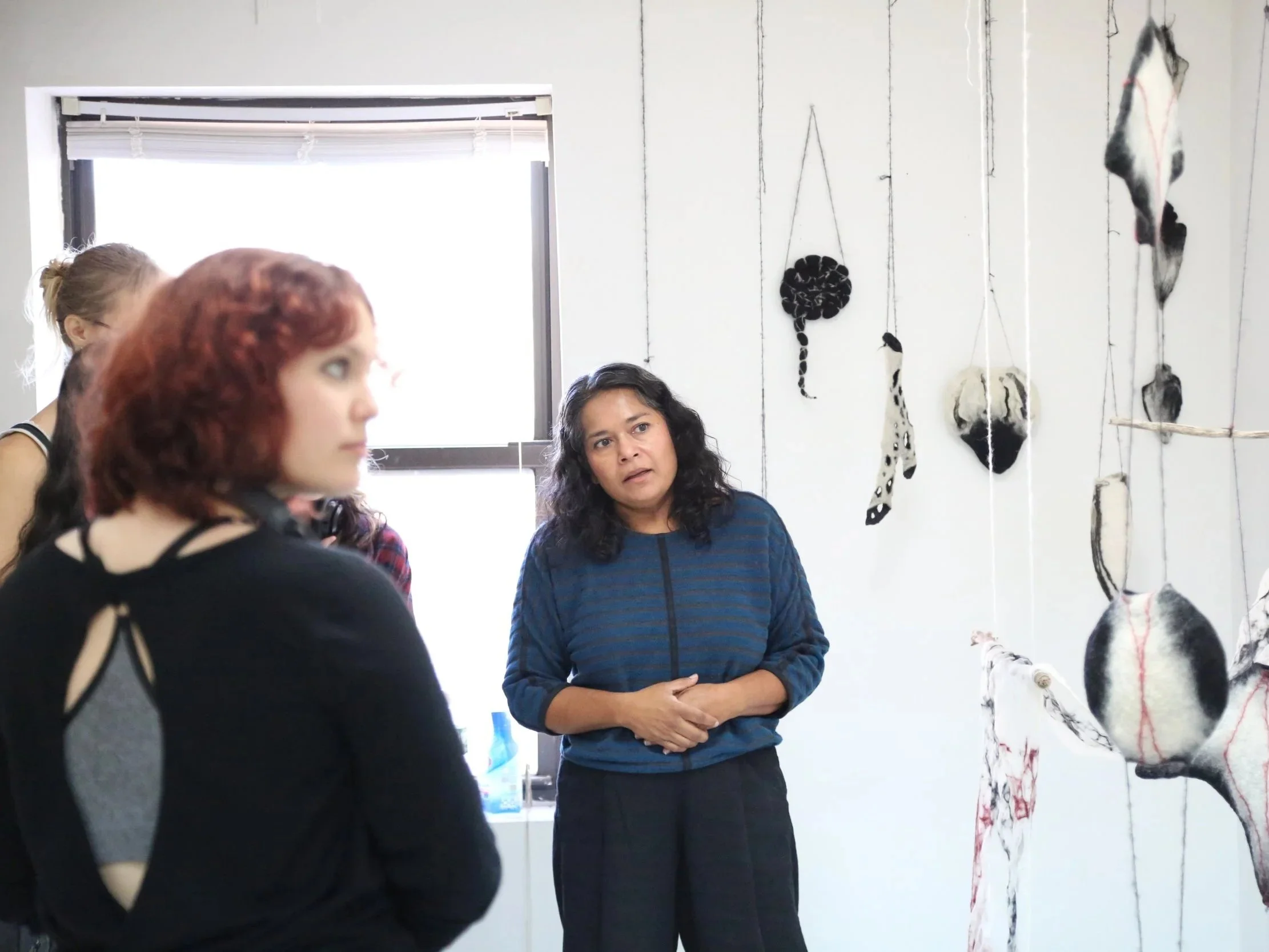
The art world never sits still. It shifts, stretches, collides, and reshapes itself as artists, institutions, and global conversations intersect in unexpected ways. Instead of trying to keep up with these changes from a distance, this seminar places you right in the center of the action. It invites you to learn by being in the room, to experience what it feels like to stand inside a working studio, speak directly with artists and curators, and move through the spaces where new ideas take shape.
Throughout the semester, we will use New York City as our classroom. We will visit artists in their studios, talk with professionals who shape contemporary art from behind the scenes, and explore galleries, nonprofits, alternative spaces, and venues that challenge traditional formats. These experiences will open up the many ways artists build their practices, form communities, and carve out fulfilling creative lives. You will see how networks of support and collaboration emerge and how they help artists thrive in a city known for its intensity and its possibilities.
We will also explore art that steps beyond the white cube and into the public realm, where it connects with new audiences and unexpected contexts. You will encounter artists who stretch the definition of what an exhibition can be, who it can reach, and how it can function in the world. Our discussions will draw from readings that focus on artist communities, collaboration, and creative correspondence to help you develop your own conceptual grounding.
By the end of the course, you will not only have a deeper understanding of contemporary art but also a lived experience of the environments that inspire it. This seminar is about stepping into the field, meeting the people who bring it to life, and gaining the insight, confidence, and curiosity to shape your own creative practice.
Taught by Skip Brea
SITE & SOUND
-
In this seminar, you will explore a chosen location to create a multimedia artwork. The course moves beyond the studio and classroom, taking your discipline—whether writing, dance, film, visual art (or other!)—into the field. The field of NYC is vastly layered and dense, with its rich neighborhoods collaged across five boroughs, parks, waterways, architecture—an ever present historical past merging with the present and imagining the future.
The practice of creating art for a specific location emerged in the late 1960s and 1970s, as artists sought to break out of the studio and engage with their surroundings. Pioneers like Robert Smithson, Christo and Jeanne-Claude, and Richard Serra created works whose meaning was intrinsically tied to a specific site. In addition to these visual artists who were making artwork out in the landscape, filmmakers (such as Maya Daren, Federico Fellini, David Lynch, Terrence Malick) and choreographers (such as Trisha Brown, Pina Bausch, Anna Halprin) also incorporated this "fieldwork" into their creative practice. What resulted was a process of thinking, researching, and working that was heavily informed by the specificities of real world locations.
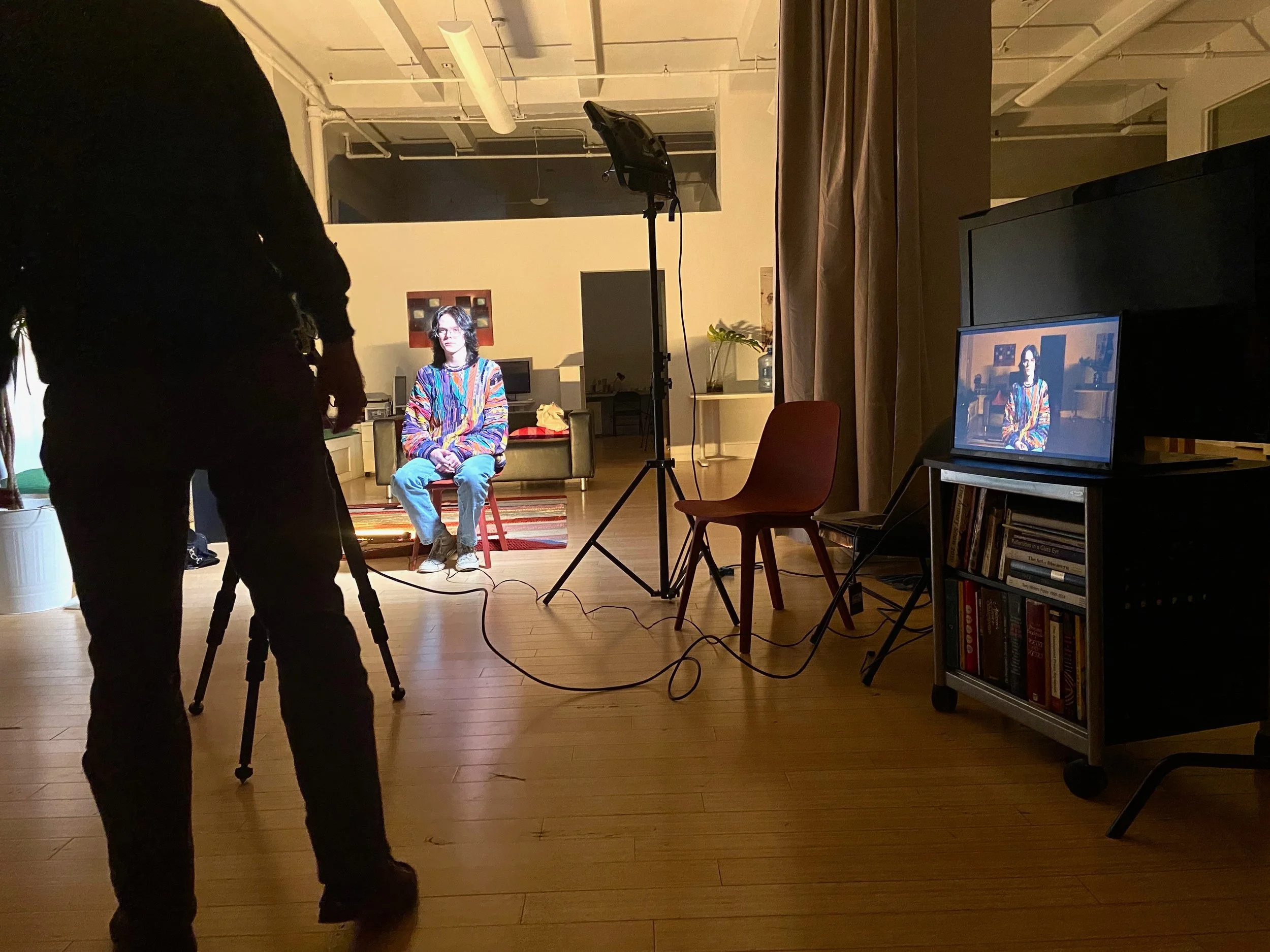
Building out of this history, you will characterize your own site by learning to record sounds and capture still and moving imagery as part of your fieldwork. The focus is on interpreting your location, using these mediums not just to document but to transform the site through a unique personal encounter. Throughout the seminar we will have the opportunity to meet with local and international guest artists (including directors, cinematographer, and composers) who will share their creative practice as well as offer feedback on the work you are developing.
Taught by Stanzi Vaubel